
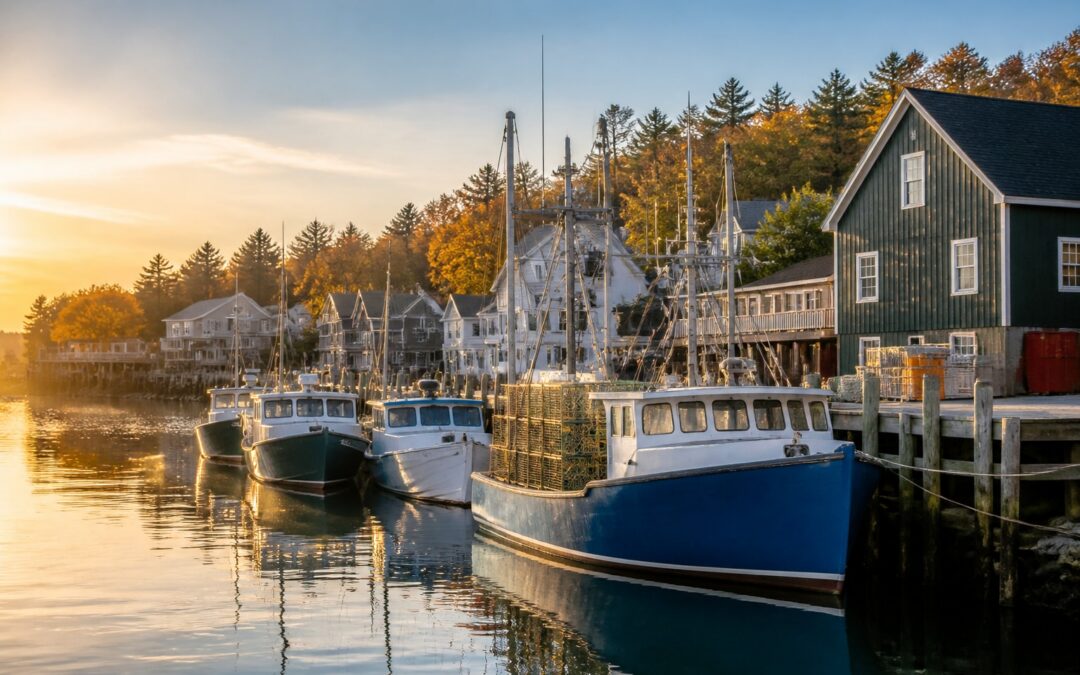
A Maine harbor is a sheltered stretch of coastline where working lobster boats, summer sailboats and small waterfront towns share the same docks, and the best way to experience one is to arrive with a tide chart, an appetite for seafood and a flexible afternoon. Maine has a long and deeply indented coastline, so choosing the right harbor depends on the kind of trip you want: busy and bustling, quiet and rugged, or a coastal stop paired with inland adventure. To view our official visitors guide click here.
What makes a Maine harbor worth visiting?
A Maine harbor combines three things few places offer together: an active fishing economy, a walkable village and a natural setting shaped by tides, granite and spruce.
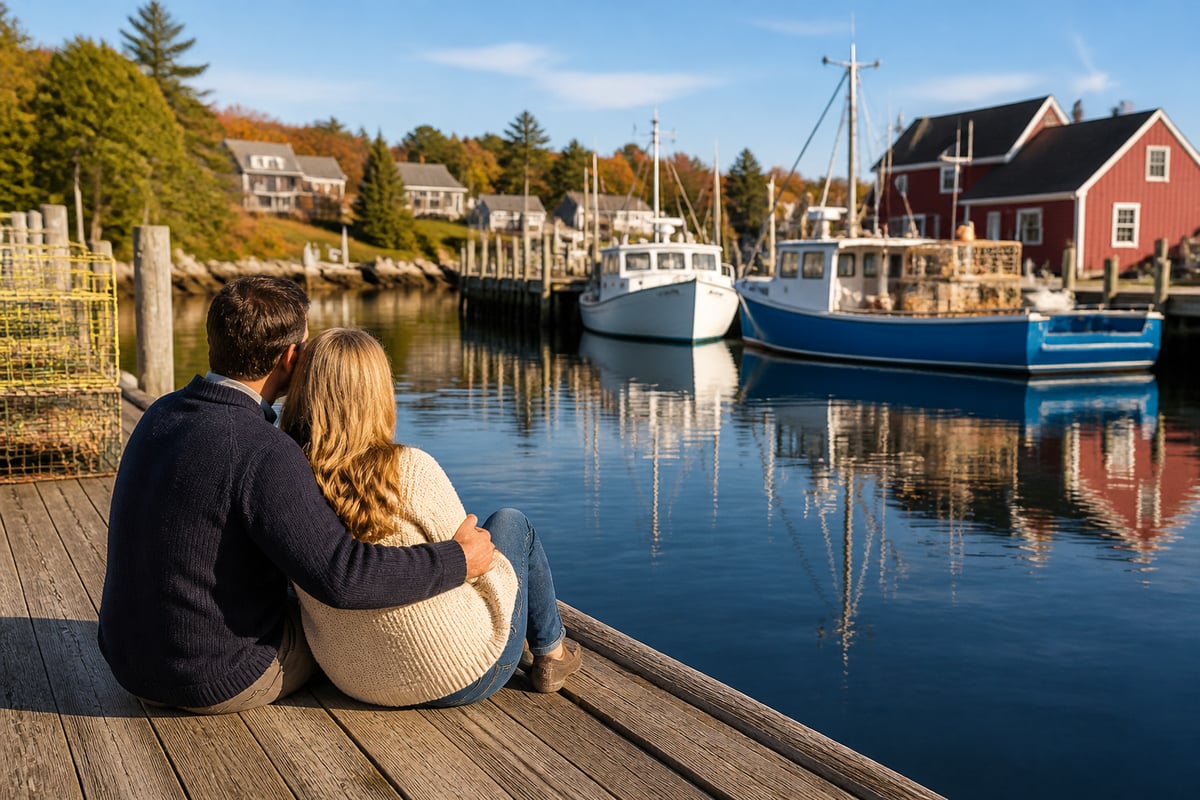
Unlike beach destinations, Maine's harbors are working places. You can watch lobstermen unload traps in the morning, then eat the same catch at a dockside shack by noon. Families tend to enjoy the hands-on quality of it, from spotting seals and ospreys to climbing aboard a small excursion boat. Couples often prefer the evening atmosphere, when the light turns amber on the water and restaurants set tables near the wharf.
The appeal also lies in scale. Most harbor villages can be explored on foot in an afternoon, with galleries, bookshops, ice cream counters and a church steeple or two to anchor the postcard view.
Which Maine coastal harbors should you consider first?
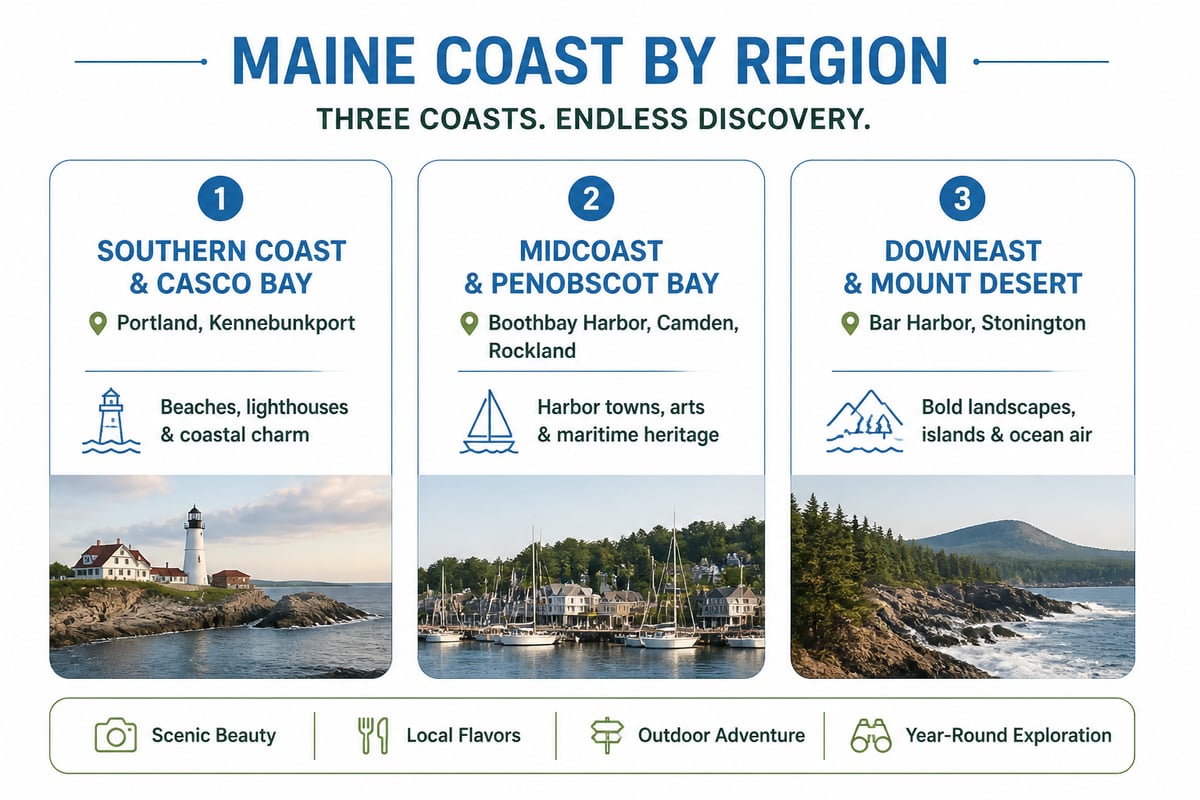
The most popular harbor towns fall into three regions, each with a different personality: Southern Maine and Casco Bay, the Midcoast and Penobscot Bay, and Downeast with Mount Desert Island.
| Region | Representative harbors | Character |
|---|---|---|
| Southern Coast and Casco Bay | Kennebunkport, Portland, Ogunquit | Polished, easy to reach, strong dining scene |
| Midcoast and Penobscot Bay | Boothbay Harbor, Camden, Rockland, Damariscotta | Classic schooners, galleries, active waterfronts |
| Downeast and Mount Desert | Bar Harbor, Southwest Harbor, Stonington | Dramatic landscape, national park access, quieter villages |
The Maine Coast Guide describes Boothbay Harbor as the busiest harbor town on its Midcoast stretch and lists 125 mapped places there, which gives a sense of how much a single town can hold. For first-time visitors, that density is useful: one base, many short outings.
Portland offers a larger-city option, with a working waterfront, a strong food scene and ferries to the Casco Bay islands. Camden and Rockland, on Penobscot Bay, suit travelers who want windjammer sailing, art museums and lively main streets within a short drive of each other.
When is the best time to visit a Maine harbor?
The best time to visit is late June through mid-October, though each season offers something different.
- Early summer (June): Cooler water, fewer crowds and long daylight. Some seasonal tours and shops are only beginning to open.
- High summer (July and August): Warmest weather and full schedules for boat trips, festivals and lobster shacks. Expect higher lodging rates and busy parking.
- Early fall (September to mid-October): Many visitors consider this the sweet spot, with crisp air, thinner crowds and changing foliage along the shoreline.
- Winter and early spring: Quiet and atmospheric, but many seasonal businesses close, so confirm hours before you travel.
Ocean temperatures stay cold even in August, so plan on kayaking, sailing or shoreline walks rather than long swims. Pack layers in every season, since a harbor breeze can drop the temperature quickly after sunset.
How do tides shape your day at a Maine harbor?
Tides determine when boats float, when tide pools appear and when some shoreline trails and sandbars are safe to walk, so checking a tide chart is a practical first step in any harbor itinerary.
Maine's tidal range is large, particularly Downeast, where water levels can shift substantially in a few hours. At low tide, a harbor may look like a bowl of mud and seaweed with boats resting on the bottom. At high tide, the same scene becomes a glassy anchorage. Neither is wrong, but the difference affects when you should schedule a kayak launch, a tide-pool walk or a photograph of the fleet.
Maine Harbors provides tide charts and local high- and low-tide predictions for harbors along the coast. Check the prediction for the specific harbor you are visiting, since times vary from one town to the next.
Safety matters as well. Never cross a tidal bar or walk out on exposed ledges without confirming when the water will return, and keep children close to the shoreline on slippery rockweed.
What can families and couples do at a Maine harbor?
A harbor day can fill easily with boat trips, shoreline exploring, waterfront dining and small-town browsing, and most activities work for both families and couples.
On the water
Scenic cruises, puffin and seal watches, lobster boat tours and schooner sails are available from many harbors in season. Guided sea kayaking is a gentler option for couples, while short excursion boats keep younger children engaged. Book morning departures when seas tend to be calmer.
On the shore
Look for lighthouse walks, tide pools, public piers and small coastal parks. Maine's Coastal Public Access Guide covers publicly accessible beaches, boat launches, parks and trails in 144 coastal municipalities and townships, which makes it a handy planning tool for finding free access points beyond the main wharf.
In town
Browse working galleries, craft shops and independent bookstores, then stop for a scoop of local ice cream. Evening is a good time for a waterfront stroll while restaurants light up.
What should you eat at a Maine harbor?
Start with lobster, but plan for more than lobster, because harbor menus also feature steamers, haddock, scallops, oysters and chowder.
Two styles of dining are worth knowing. Lobster pounds and dockside shacks are casual, often outdoors, and serve lobster by the pound with corn and drawn butter on paper trays. Sit-down restaurants offer a more refined take, with seasonal produce and local seafood on the same menu. Many families do one of each during a trip.
A few ordering tips help:
- Ask whether lobster is "hard shell" or "soft shell." Soft shell, common in late summer, is easier to crack and slightly sweeter, though it holds less meat.
- Request a lobster bib and a cracker if they are not offered automatically.
- Try a lobster roll served either hot with butter or chilled with mayonnaise, and decide which style you prefer.
- Leave room for blueberry desserts, whoopie pies and local craft beer or cider.
How can you pair a Maine harbor with inland adventure?
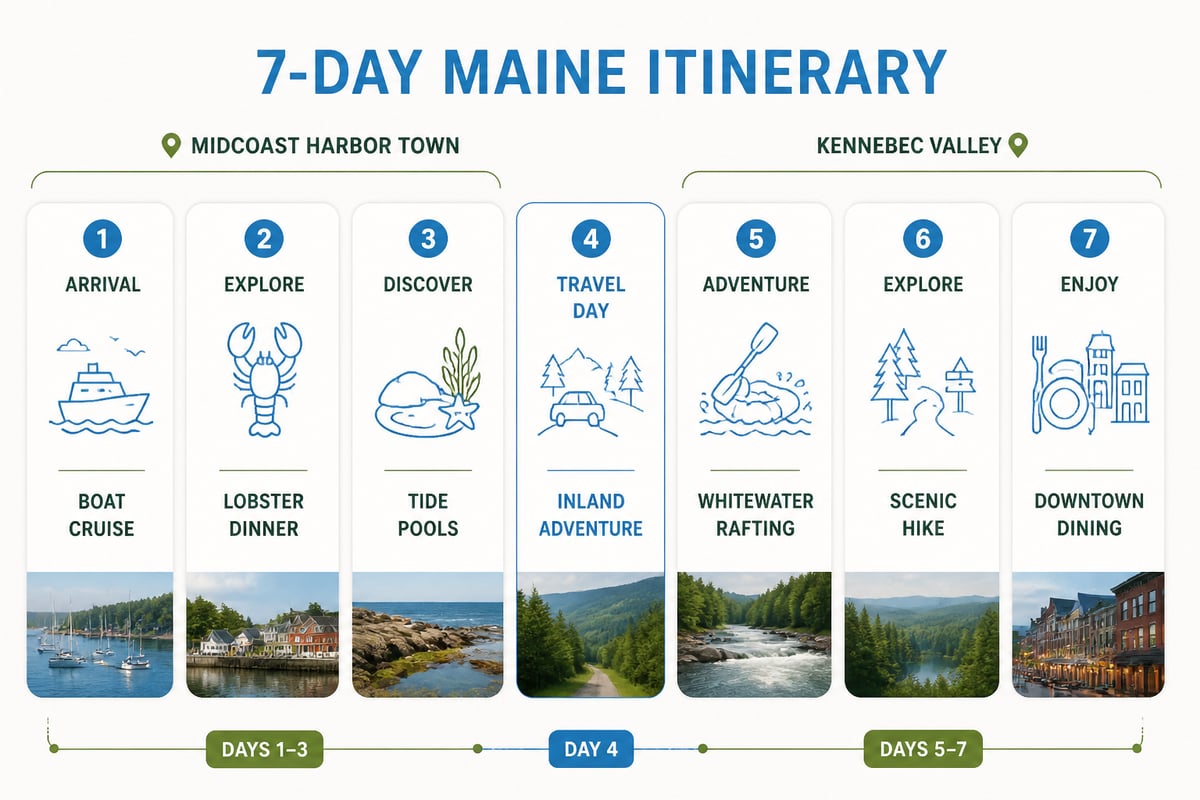
You can balance a coastal stay with a few days inland, where rivers, mountains and lakes add a very different kind of adventure to the same trip.
Many travelers spend a few days on the coast and then drive inland to the Kennebec Valley, a region of rivers, lakes and mountains to explore. The region is known for whitewater rafting on the Kennebec and Dead Rivers. Hiking, paddling, snowmobiling and snowshoeing round out recreation across all four seasons, so the inland leg works whether you visit in July or January.
The change of pace is part of the appeal. After a harbor town's seafood and sea breeze, the valley offers walkable historic downtowns with restaurants, shops, theaters and galleries, plus trails for gentler family outings. If you want ideas to build that second half of the trip, these pages are a good starting point:
- Best restaurants in central Maine for small-town dining after a day outdoors
- Maine activities for rafting, trail and seasonal ideas
- Maine must-sees for sights worth adding to a route
How do you plan a Maine harbor trip step by step?
A smooth harbor trip comes from deciding on a region, booking early and building a loose schedule around tides and weather.
- Choose a region. Match the harbor's personality to your group: lively Midcoast towns for first-timers, quieter Downeast villages for peace and scenery.
- Set your dates. Late June and September often balance good weather with lighter crowds.
- Reserve lodging and key tours early. Popular harbors fill up quickly in July and August, particularly for weekends.
- Check tides and forecasts. Plan kayaking, tide pools and photography around the predictions for your specific harbor.
- Scout public access points. Use the state's coastal access resources to find free piers, trails and picnic spots.
- Add an inland leg. Extend the trip with river and mountain time for variety.
- Pack for changing weather. Bring a windproof layer, non-slip shoes and a small cooler for market snacks.
Maine's own visitor planning page collects tourism resources and guidebooks. For the inland portion of your route, the Kennebec Valley's Official Visitors Guide gathers lodging, dining and outdoor activity ideas in one place, which makes it easy to line up a rafting day or a downtown dinner with the rest of your schedule.
What should you know about parking, crowds and etiquette?
Arrive early, expect limited parking in peak season and treat working docks as workplaces, not attractions.
Busy harbor towns often have a small municipal lot that fills by mid-morning, so plan to park once and walk. Some towns offer shuttles or remote lots during peak weeks. On the waterfront, stay clear of lobster traps, ropes and gear stacked on piers, and never board a commercial boat without invitation.
Respect posted signs on private wharves and rocky shoreline. Much of Maine's coast is privately owned, and public access is a privilege protected by courteous behavior. Pack out your trash, keep dogs leashed where required and give wildlife, including seals resting on ledges, plenty of room.
What are common questions about visiting a Maine harbor?
Is a Maine harbor suitable for young children?
Yes, with supervision. Choose harbors with gentle shoreline access and short boat trips, keep children away from dock edges and slippery rocks, and bring lifejackets for any on-the-water outing.
Do I need a car?
A car is the easiest way to reach most harbor towns and to combine a coastal stay with inland stops. Once you arrive, many villages are best explored on foot.
How many days should I spend in one harbor town?
Two to three nights suit most visitors: enough for a boat trip, a few meals and a day of exploring nearby coves or trails, without feeling rushed.
What if the weather turns foggy or rainy?
Fog is common along the coast, particularly in early summer. Lean on galleries, museums, maritime exhibits and cozy restaurants, and keep a flexible day for the boat trip you most want to take.
Start by picking one harbor town and one inland stop, then check the tide predictions and lodging availability for your dates. When you are ready to build the second half of the trip, the Official Visitors Guide lays out rafting, hiking, dining and downtown culture in one place. Kennebec Valley Tourism Council makes that planning easy, so request a copy of the visitor guide and add river adventure to your coastal getaway.