
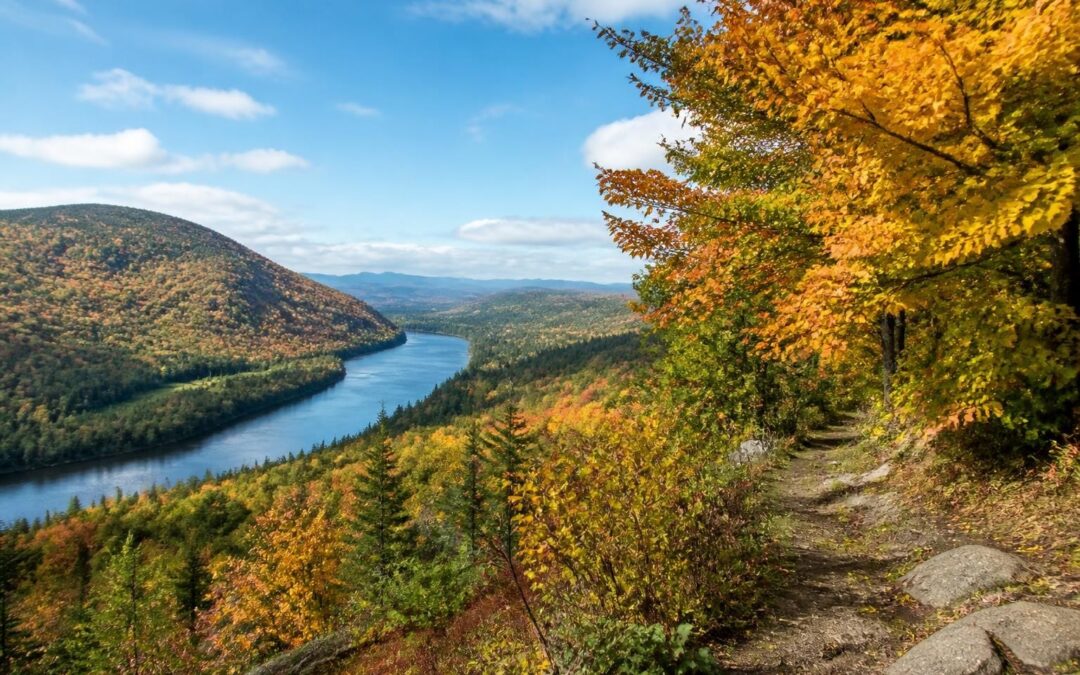
Maine's autumn landscape transforms into a breathtaking canvas of crimson, amber, and gold, creating ideal conditions for hiking enthusiasts seeking the best fall hikes Maine has to offer. The period between late September and mid-October delivers spectacular foliage displays across the state's diverse terrain, from coastal mountains to inland river valleys. Whether you're an experienced backpacker or a casual day-hiker, Maine's trail network provides countless opportunities to immerse yourself in autumn's natural beauty while enjoying crisp, comfortable temperatures perfect for outdoor exploration. To view our official visitors guide click here.
Premier Coastal and Mountain Trails
Maine's coastal regions combine ocean vistas with mountain terrain, offering distinctive perspectives during peak foliage season. Acadia National Park stands as the crown jewel of coastal hiking destinations, where more than 120 miles of trails wind through forests ablaze with fall color.
Acadia National Park's Autumn Highlights
The Acadia hiking trail system presents options for every skill level, with October typically delivering the most vibrant displays. Cadillac Mountain's South Ridge Trail provides a 7.4-mile round-trip journey through forests transitioning from green to brilliant reds and oranges, culminating in panoramic views from the highest point on the Atlantic coast.
Popular Acadia fall routes include:
- Beehive Trail: Challenging 1.4-mile loop with iron rungs and ladders
- Jordan Pond Path: Gentle 3.3-mile loop perfect for families
- Precipice Trail: Strenuous 2.6-mile climb (closes during peregrine falcon nesting)
- Ocean Path: Easy 4-mile coastal walk connecting Sand Beach to Otter Point
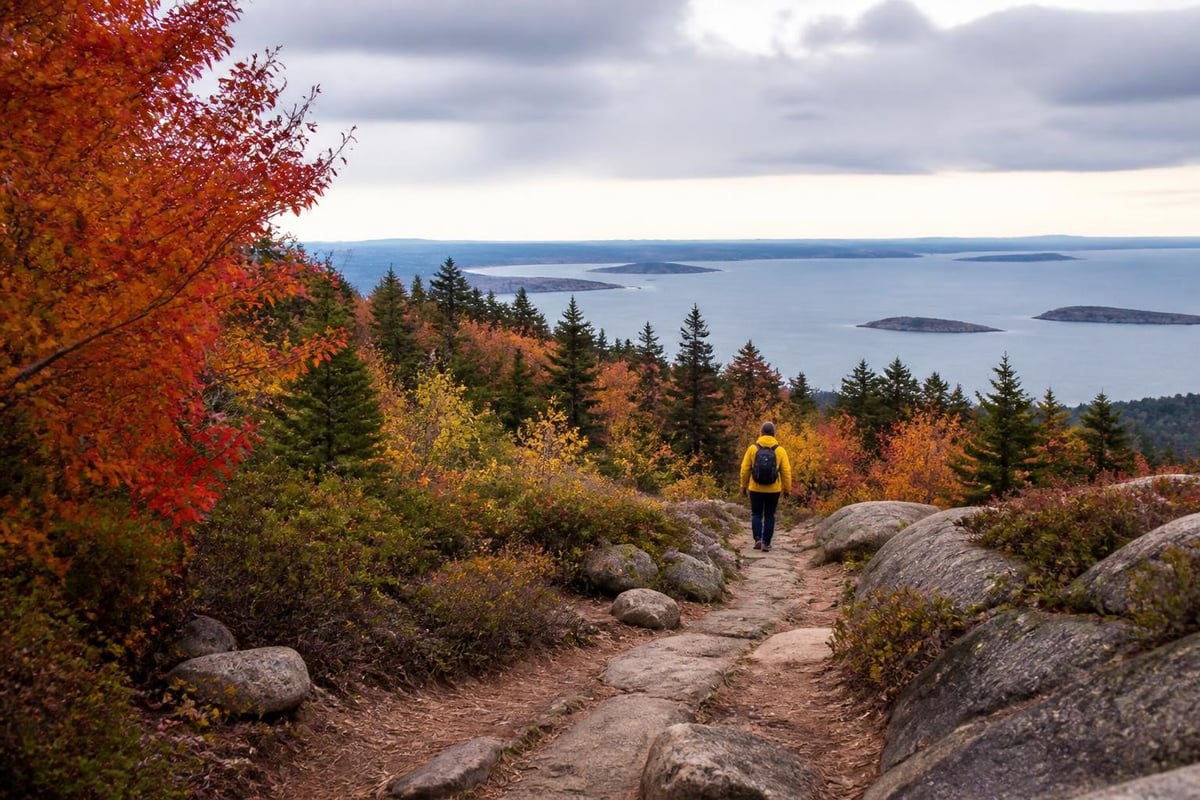
The National Park Service recommends timing visits to coincide with the transition period when maples, birches, and oaks reach their most intense coloration. Weekday mornings offer the best chance to experience popular trails with fewer crowds.
Coastal Range Alternatives
Beyond Acadia, Maine's mid-coast region features lesser-known gems that rival the park's beauty. Mount Battie in Camden Hills State Park offers a 1.8-mile ascent rewarding hikers with sweeping views of Penobscot Bay framed by autumn foliage. The Bald Rock Mountain Trail in Lincolnville delivers equally impressive vistas with significantly lighter foot traffic.
Kennebec Valley's Hidden Treasures
The Kennebec Valley region provides exceptional fall hiking opportunities often overlooked by visitors focused solely on coastal destinations. This central Maine corridor combines riverside trails, moderate peaks, and extensive forest networks that explode with color throughout October.
Riverside and Waterfall Routes
Moxie Falls, accessible via a 1.8-mile round-trip trail near The Forks, ranks among New England's most impressive waterfalls. The path winds through dense hardwood forests where sugar maples create a golden canopy overhead before revealing the 90-foot cascade. The surrounding Kennebec River valley offers multiple outdoor activities that complement hiking excursions.
| Trail Name | Distance | Difficulty | Peak Features |
|---|---|---|---|
| Moxie Falls | 1.8 mi RT | Easy | 90-ft waterfall, maple forest |
| Pleasant Pond Mountain | 4.6 mi RT | Moderate | 360° summit views |
| Mount Pisgah | 1.4 mi RT | Easy | Lake views, family-friendly |
Pleasant Pond Mountain in Caratunk delivers one of the region's finest summit experiences. The 4.6-mile round-trip climbs steadily through mixed forests before opening to panoramic views encompassing multiple lakes and distant mountain ranges, all framed by autumn's vibrant palette.
Kennebec Highlands Trails
The Kennebec Highlands conservation area encompasses over 6,000 acres of protected forestland laced with hiking trails perfect for fall exploration. Jamies Pond Wildlife Management Area features gentle trails circling pristine water bodies, where October reflections double the visual impact of surrounding foliage.
These trails connect visitors to Maine's authentic backcountry experience, far from tourist congestion. The network includes:
- Vienna Mountain: 2.8-mile moderate climb to fire tower
- Hogback Mountain: 1.2-mile steep ascent with lake panoramas
- Watson Pond Loop: 3.5-mile easy forest circuit
Western Mountain Wilderness
Maine's western mountains host some of the state's most challenging and rewarding best fall hikes Maine backpackers seek. This region experiences peak foliage slightly earlier than coastal areas, typically reaching maximum color intensity during the final week of September through early October.
Bigelow Range and Flagstaff Lake
The Bigelow Range, stretching nearly 12 miles along Flagstaff Lake's northern shore, offers multi-day backpacking opportunities or challenging day hikes. Cranberry Peak provides a moderate 5.2-mile round-trip option showcasing the range's dramatic terrain without requiring full traverse commitment.
Avery Peak, the range's highest summit at 4,088 feet, can be reached via an 11-mile round-trip that climbs through distinct vegetation zones. Lower elevations feature brilliant hardwood displays while higher terrain transitions to evergreen forests and alpine zones.
Appalachian Trail Sections
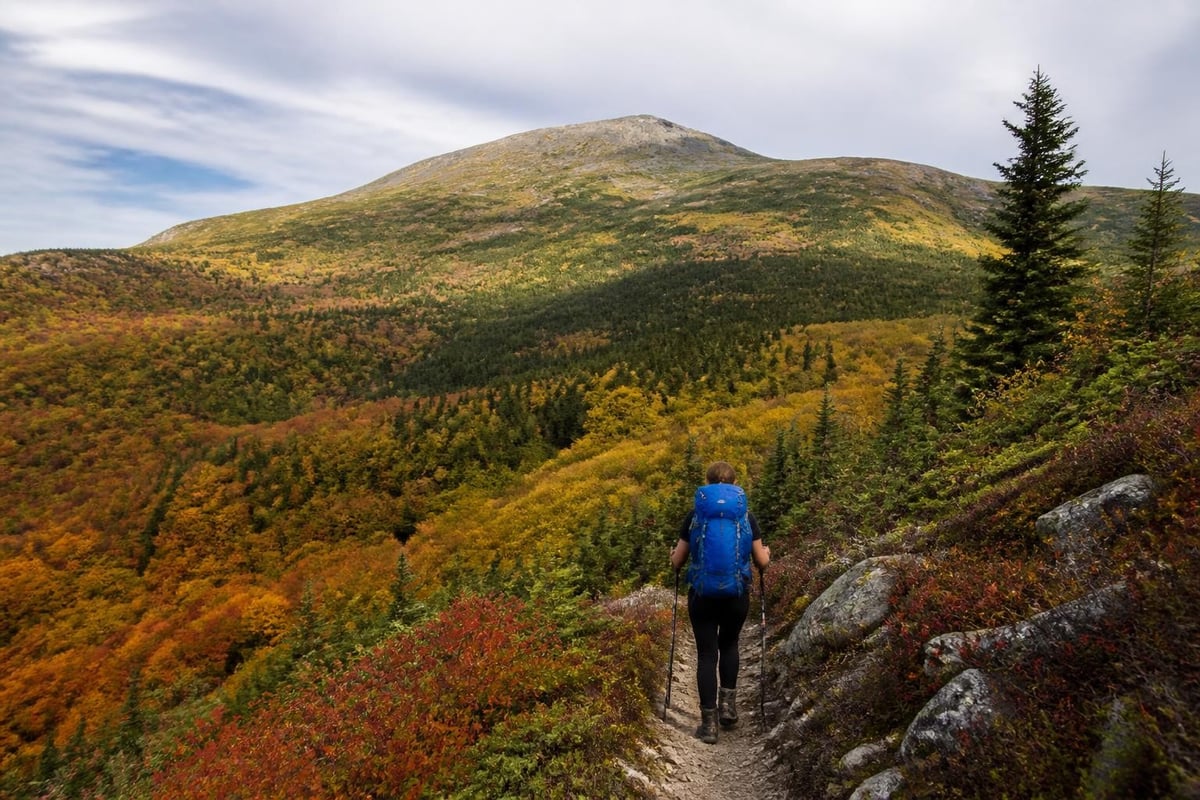
The Appalachian Trail’s Maine section encompasses the trail's most rugged terrain. Day hikers can sample this iconic route through strategic access points. Saddleback Mountain offers a 10-mile round-trip featuring extended above-treeline hiking with 360-degree views during peak foliage season.
The Maine Appalachian Trail Club maintains detailed resources for planning AT section hikes, including current trail conditions and seasonal considerations crucial for autumn visits.
Northern Wilderness Expeditions
Baxter State Park and surrounding North Maine Woods territories present wilderness hiking at its finest. This region demands serious preparation but rewards adventurers with unmatched solitude and pristine fall landscapes.
Baxter State Park Highlights
Mount Katahdin, Maine's highest peak and the AT's northern terminus, attracts hikers worldwide. The Knife Edge Trail represents one of America's most thrilling hiking routes, traversing a narrow ridge with dramatic exposure and stunning fall vistas. This 10.4-mile loop via the Helon Taylor and Knife Edge trails requires excellent weather, as autumn conditions can shift rapidly above treeline.
More accessible Baxter options include:
- South Turner Mountain: 4.0-mile moderate climb with Katahdin views
- Doubletop Mountain: 6.8-mile loop through pristine forest
- Sentinel Mountain: 5.2-mile approach to secluded summit
Timing and Preparation
Northern Maine experiences earlier foliage transitions, with peak color typically occurring from September 20 through October 5. The Maine fall foliage timing guide provides weekly updates helping hikers optimize their visit timing across different regions.
| Region | Peak Foliage Window | Trail Conditions | Recommended Skill |
|---|---|---|---|
| Northern | Sept 20 – Oct 5 | Remote, variable weather | Advanced |
| Western Mountains | Sept 25 – Oct 10 | Challenging, exposed summits | Intermediate-Advanced |
| Kennebec Valley | Oct 1 – Oct 15 | Moderate, well-marked | All levels |
| Coastal | Oct 5 – Oct 20 | Popular, maintained paths | All levels |
Planning Your Fall Hiking Adventure
Successful autumn hiking in Maine requires understanding regional variations, weather patterns, and preparation essentials. October weather ranges from sunny 60-degree days to sudden cold fronts bringing rain or even early snow at higher elevations.
Essential Gear and Safety
Layering systems prove critical for Maine fall hiking. Morning temperatures often start in the 30s or 40s, climbing to 50s or 60s by afternoon. Recommended layers include:
- Moisture-wicking base layer
- Insulating mid-layer (fleece or light down)
- Waterproof/windproof outer shell
- Hat and gloves for early starts or summit exposure
Navigation tools remain essential even on well-marked trails, as shorter daylight hours in October require careful time management. Sunset occurs around 6:00 PM in early October, advancing to 5:00 PM by month's end.
Trail Etiquette and Conservation
Maine's best fall hikes Maine conservationists protect require responsible visitor behavior. Leave No Trace principles become especially important during peak season when trail traffic intensifies.

Pack out all waste, stay on marked trails to prevent erosion, and avoid disturbing wildlife preparing for winter. Many animals actively forage during fall, and human interference can compromise their cold-season survival.
Regional Resources and Trail Guides
Multiple organizations maintain comprehensive trail information for planning Maine fall hiking adventures. MaineHikes.org’s fall foliage collection curates trails specifically selected for autumn viewing, with detailed descriptions, driving directions, and recent trip reports.
The Maine Department of Conservation’s foliage hike recommendations highlight state park options across all regions, many offering facilities like parking, restrooms, and interpretive signage that enhance the hiking experience.
Digital and Print Planning Tools
Modern hikers benefit from both digital resources and traditional guidebooks. Mobile apps provide real-time trail conditions and GPS navigation, while printed guides offer reliability when cell coverage disappears in remote areas.
The Official Visitors Guide from the Kennebec Valley Tourism Council includes comprehensive regional trail information, lodging options, and dining recommendations that help visitors plan complete fall getaways centered around hiking adventures.
Best Practices for Peak Color Timing
Predicting exact peak foliage timing requires monitoring multiple factors. Elevation significantly influences color progression, with higher terrain changing 1-2 weeks before lower valleys. Northern latitudes similarly advance ahead of southern coastal regions.
Temperature patterns drive color intensity. Cool nights combined with sunny days produce the most vibrant displays, while prolonged warm spells delay transitions and extended rainy periods can diminish color quality.
Weekly Monitoring Strategies
Successful timing involves tracking foliage reports beginning in mid-September. State forestry services, tourism offices, and hiking organizations publish weekly updates detailing current conditions across different regions.
Consider planning flexible travel dates if possible, allowing adjustments based on real-time reports issued the week before your trip. Wednesday or Thursday reports provide excellent guidance for weekend hiking plans.
Family-Friendly Fall Hiking Options
Maine offers numerous gentle trails perfect for introducing children to autumn hiking. These routes combine manageable distances with engaging features that maintain young hikers' interest.
Sabattus Mountain in Lovell provides a 1.2-mile climb suitable for elementary-aged children, rewarding effort with summit views and opportunities to spot migrating hawks riding thermal currents. Table Rock near Grafton Notch delivers dramatic cliff-top views via a 2.4-mile round-trip through brilliant hardwood forests.
Waterfall hikes particularly captivate young adventurers:
- Step Falls Preserve: 1.0-mile easy walk to cascades
- Angel Falls: 3.8-mile moderate trek to Maine's highest waterfall
- Houston Brook Falls: 1.6-mile family-friendly forest walk
Advanced Multi-Day Circuits
Experienced backpackers can design multi-day circuits combining the best fall hikes Maine's backcountry offers. The 100-Mile Wilderness section of the Appalachian Trail represents the ultimate challenge, requiring 7-10 days and complete self-sufficiency through remote terrain ablaze with October color.
More moderate multi-day options include the Grafton Loop Trail, a 38-mile circuit through the Mahoosuc Range typically completed in 3-4 days. This route connects multiple peaks, pristine ponds, and extensive alpine zones, all accessible during peak foliage season with proper preparation.
Permits and reservations become essential for popular backcountry areas during fall. Baxter State Park limits daily entries and requires advance reservations for camping facilities. Many trails in the park reach capacity on peak foliage weekends, making weekday visits or early-season timing strategic choices.
Photography and Fall Hiking
October hiking in Maine presents extraordinary photography opportunities. Golden hour lighting around sunrise and sunset intensifies already-vibrant foliage colors, creating unforgettable images.
Composition techniques for fall trail photography include using leading lines created by trails, framing distant mountains through foreground foliage, and capturing water reflections that double visual impact. Overcast days, often dismissed by hikers preferring sunshine, actually provide ideal lighting for forest photography by eliminating harsh shadows and preventing blown-out highlights on bright leaves.
Essential camera settings for fall foliage include slightly increased saturation, polarizing filters to deepen blue skies and reduce glare on wet leaves, and faster shutter speeds to freeze leaf movement on breezy days.
Maine's exceptional fall hiking opportunities span diverse terrain and difficulty levels, ensuring every outdoor enthusiast discovers trails matching their abilities and interests during the spectacular autumn season. From the coastal peaks of Acadia to the riverside paths of the Kennebec Valley and the remote wilderness of Baxter, the state's trail network showcases some of New England's finest October landscapes. The Kennebec Valley Tourism Council provides comprehensive planning resources, lodging recommendations, and insider guidance to help you craft the perfect fall hiking adventure in central Maine's scenic landscapes, ensuring your autumn exploration becomes a memorable experience you'll want to repeat year after year.